- Departments & Officials
- Courts & Sheriff
- Information
- Online Services
Key - Tuscola County
Quick Reference Mosquito Key
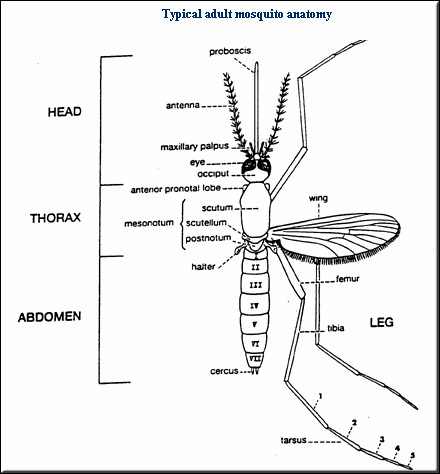
- 1) Examine mouth parts
- 1a) Palpus as long as proboscis, dark spots on wings = Anopheles spp
- 1b) Palpus shorter than proboscis- 2
- 2) Examine end of abdomen
- 2a) Has pointed abdomen, cercus extended- 3
- 2b) Has rounded or blunt abdomen, cercus retracted-4
- 3) Examine size of mosquito
- 3a) Large mosquito, 1cm in length = Psorophora spp
- 3b) Smaller mosquito, more commonly found = Aedes spp
- 4) Examine size and coloration
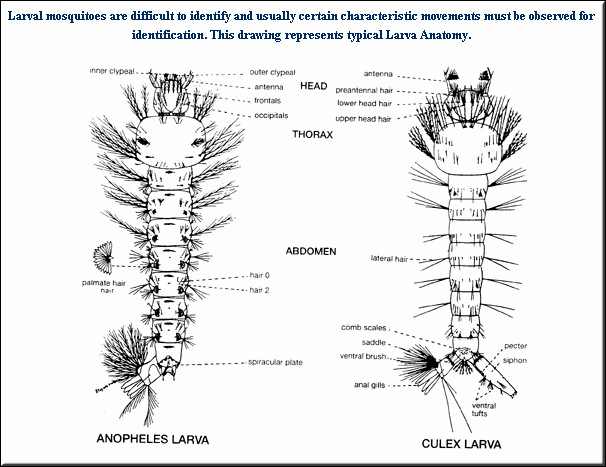
- 4a) Larger relative to other mosquitoes, posses hairs on wing viens near thorax = Culiseta spp.
- 4b) Relatively smaller, uniform color = Culex spp.
- 4c) Proboscis has stripe, pepper colored wing scales = Coquillettidia perturbans
- 4d) Small dark mosquito with metallic blue head scales = Uranotaenia sapphirina
.jpg)